QMS & PQS Implementation · 6 min read
Building a Pharmaceutical Quality System That Inspectors Trust
A quality management system is only as good as the behaviour it drives. Here are the six pillars of a PQS that keeps you compliant and earns inspector confidence.
By Balasubramanian Ramaiah · 9 June 2026 · Updated 21 June 2026

A quality management system is not a binder on a shelf — it is the set of behaviours that keeps every batch safe and every decision defensible. Inspectors look at your quality management system first because it predicts everything else they will find. A strong Pharmaceutical Quality System (PQS), in the spirit of ICH Q10, rests on six pillars.
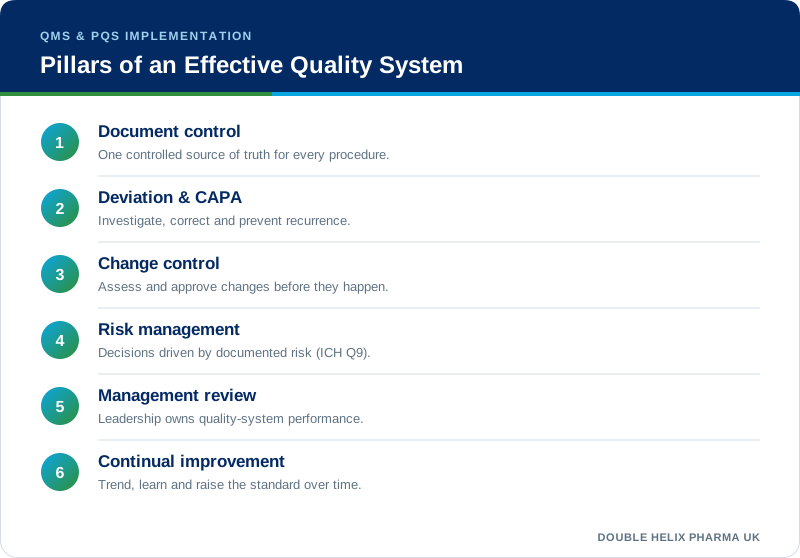
1. Document control
Every procedure should have one controlled, current, approved version — available where the work happens. When an SOP describes a process nobody follows, you have two problems: a compliance gap and a culture signal. Get the basics right and the rest gets easier.
2. Deviation and CAPA management
Things go wrong in every operation; what matters is how you respond. A healthy system shows sound root-cause investigation, honest impact assessment and corrective actions that actually prevent recurrence. This is also the backbone of inspection readiness.
3. Change control
Unmanaged change is how validated processes quietly drift out of control. A proportionate change-control process assesses impact and secures approval before a change is made — not after.
4. Risk management
Quality decisions should be driven by documented risk, in line with ICH Q9. Risk thinking is what lets you focus effort where it protects the patient, rather than spreading it thinly everywhere.
5. Management review
A PQS only works if leadership owns it. Regular management review — looking at trends, audits, complaints and CAPAs — turns quality from a department into a business priority.
6. Continual improvement
The best systems trend their own data, learn from it and raise the standard over time. Continual improvement is what separates a system that passes inspections from one that keeps getting better between them.
Making it real
A system on paper is not the same as a system in practice. If you are building or rebuilding a PQS — or want to test whether yours would survive an audit — we can help, including Qualified Person oversight while you mature it. See our case studies or book a call.
Regulatory sources
This guidance reflects current UK and EU GMP/GDP requirements. Primary references:
- EU GMP Chapter 1 — Pharmaceutical Quality System
- EudraLex Volume 4 — EU GMP Guidelines
- EMA — GMP/GDP Questions & Answers
Always confirm against the latest published version of each source.
Frequently asked questions
Which standards should our QMS follow?+
EU GMP Chapter 1 and ICH Q10 are the backbone, supported by quality risk management (ICH Q9) and, where relevant, US 21 CFR 210/211.
How long does a QMS take to implement?+
A proportionate, inspection-ready system for a small site is typically built in 3–6 months, depending on scope and existing maturity.
Will the system be tailored to our size?+
Always — an effective QMS is proportionate to your risk and operations, not a generic binder of SOPs nobody follows.