Supplier & Vendor Management · 5 min read
Supplier Qualification That Actually Protects Product Quality
Your compliance is only as strong as your weakest supplier. Here is a risk-based supplier qualification lifecycle that stands up to inspection.
By Balasubramanian Ramaiah · 9 June 2026 · Updated 19 June 2026

Outsourcing a step does not outsource the responsibility. When an inspector follows the thread of a problem, it often leads to a supplier who was never properly qualified. Effective supplier and vendor management is a lifecycle, not a one-off questionnaire — and treating it that way is what protects product quality.
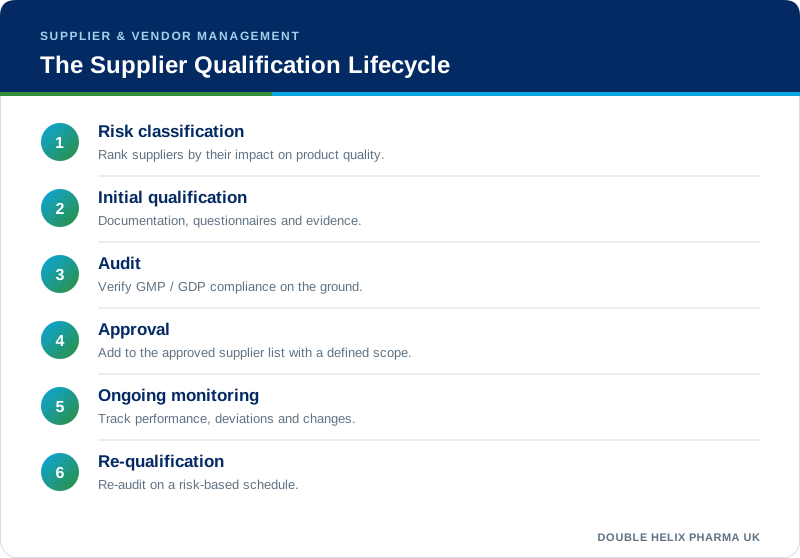
1. Classify by risk
Not every supplier matters equally. Rank them by their impact on product quality so your effort goes where the risk is — an API manufacturer is not a stationery vendor.
2. Qualify before you rely
Initial qualification gathers the documentation, questionnaires and evidence that a supplier can meet your requirements before you depend on them.
3. Audit the high-risk ones
For critical suppliers, paperwork is not enough. An on-site or remote GMP/GDP audit verifies that what is written down is what actually happens.
4. Approve with a defined scope
Approval should be explicit: which materials or services, under what conditions, recorded on a controlled approved-supplier list.
5. Monitor continuously
Qualification is a snapshot; performance changes. Track deviations, complaints, delivery and any changes the supplier makes to their process.
6. Re-qualify on a schedule
Re-audit and re-assess on a risk-based cycle so approval reflects reality, not history.
The payoff
A disciplined lifecycle means no scramble when an inspector asks for your supplier file — and fewer quality surprises. It pairs naturally with strong distribution controls and overall audit readiness. See our case studies or talk to us.
Regulatory sources
This guidance reflects current UK and EU GMP/GDP requirements. Primary references:
- EU GMP Chapter 7 — Outsourced Activities
- EU GMP Part II — Active Substances (APIs)
- EMA — GMP/GDP Questions & Answers
Always confirm against the latest published version of each source.
Frequently asked questions
When does a supplier need an on-site audit?+
Risk-based: critical material and active-ingredient suppliers usually warrant on-site audits, while lower-risk suppliers may be qualified by questionnaire and documentation.
How often should suppliers be re-audited?+
Typically every 1–3 years based on risk and performance, with interim monitoring of quality and delivery metrics.
Can you run supplier audits on our behalf?+
Yes — we conduct independent GMP/GDP supplier audits in the UK, EU and internationally and deliver clear, actionable reports.